



Choose your ritual
More Servings. Better Value.
Every bottle includes 60 one-teaspoon servings.

Save $2

2-Bottle Bundle
2 bottles · 120 servings
$37.98
$18.99 per bottle
$0.32 per serving
Best Value
Save $12

3-Bottle Bundle
3 bottles · 180 servings
$47.97
$15.99 per bottle
$0.27 per serving
Ready-to-Drink
Your Daily Shot. Ready When You Are.
16 convenient 1 fl oz servings per bottle, no mixing or measuring.

Save $2.34

2-Bottle Bundle
2 bottles · 32 shots
$27.64
$13.82 per bottle
$0.86 per shot
Best Value
Save $7.20

3-Bottle Bundle
3 bottles · 48 shots
$37.77
$12.59 per bottle
$0.79 per shot

Clean by Design
Nothing Extra Everything Intentional
A thoughtfully formulated blend, made without:
High-Fructose Corn Syrup
Dairy
Caffeine
Gelatin
Sugar
Synthetic Colors
GMOs
Gluten
BPA
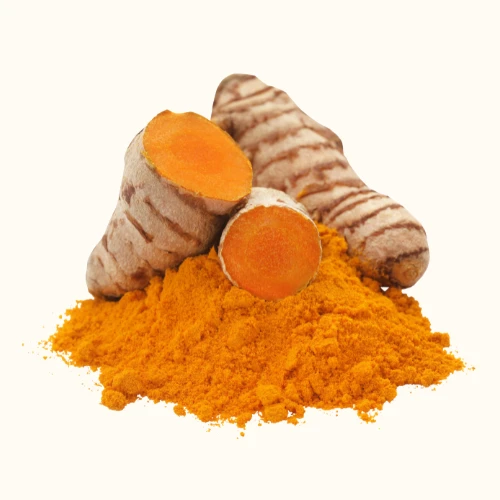
Turmeric (Curcumin and Tetrahydrocurcumin)
Curcumin, the principal bioactive compound found in turmeric, has been extensively studied for its role in supporting the body’s natural inflammatory response. Scientific research shows that curcumin interacts with multiple molecular pathways related to inflammation, oxidative stress, and cellular signaling.
Curcumin is poorly soluble in water, which limits its dispersion and persistence in aqueous biological environments. Once ingested, curcumin undergoes metabolic transformation through intestinal and hepatic processes. A healthy gut microbiota plays a key role in this process, participating in the conversion of curcumin into metabolites such as tetrahydrocurcumin.
In contrast to native curcumin, tetrahydrocurcumin is more water-soluble, which has been associated with improved stability and biological availability in systemic circulation.
For this reason, tetrahydrocurcumin has been widely studied as one of the forms through which curcumin-derived compounds may circulate in the bloodstream and interact with cells throughout the body.
Tetrahydrocurcumin has attracted significant scientific interest for its antioxidant properties and its role in supporting a balanced inflammatory and oxidative response, and is considered one of the key active metabolites associated with curcumin intake.
Together, curcumin and tetrahydrocurcumin have been the subject of extensive scientific investigation for their complementary roles in supporting cellular health, antioxidant defenses, and inflammatory balance as part of a healthy lifestyle.
Sources:
Scientific Evidence on Curcumin, Tetrahydrocurcumin, and Inflammatory Pathways
Biological Activities and Metabolic Significance of Tetrahydrocurcumin
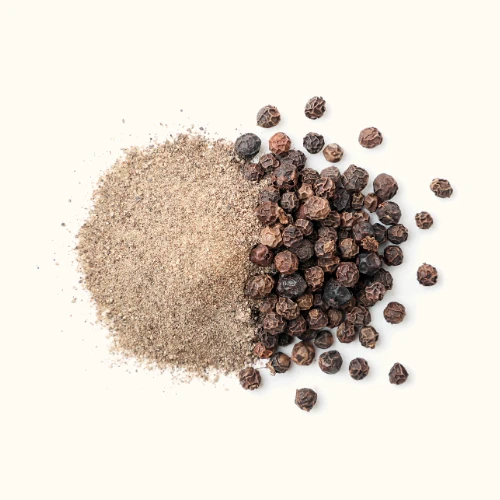
Black Pepper (Piperine)
Piperine has been studied for its ability to reversibly modulate certain hepatic enzymes, such as UGT and SULT, which are involved in the glucuronidation and sulfation of curcumin.
Through this mechanism, piperine may help curcumin remain bioavailable for a longer period of time, supporting its passage to the small intestine, where the gut microbiota participates in its metabolic transformation into derivatives such as tetrahydrocurcumin.
These metabolites have been widely researched for their role in supporting a balanced inflammatory response in the body.
In addition, piperine itself has been the subject of scientific studies for its involvement in the modulation of inflammatory processes, suggesting a complementary role when combined with curcumin as part of a balanced diet.
Sources:
Scientific Evidence on Curcumin Metabolism and the Role of Piperine
Anti-inflammatory effects of piperine
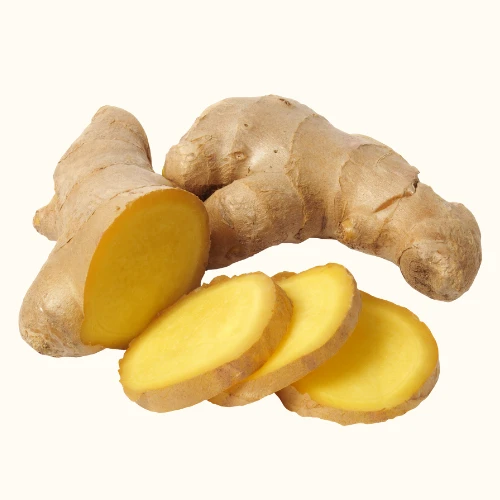
Ginger (Gingerol)
Gingerols, the principal active compounds found in ginger, have been widely studied for their role in supporting the body’s natural inflammatory and oxidative balance.
Scientific research indicates that gingerols, when combined with curcumin, the primary bioactive compound in turmeric, interact with complementary molecular pathways involved in inflammatory signaling and cellular stress responses. Rather than counteracting each other, studies suggest that curcumin and gingerols act in a synergistic and complementary manner, supporting balanced biological responses.
Together, curcumin and gingerols have been extensively researched for their contribution to antioxidant defenses and the modulation of inflammatory processes as part of a healthy lifestyle.
Sources:
Curcumin–Ginger Phytochemical Synergy
Complementary Biological Effects of Turmeric and Ginger Compounds
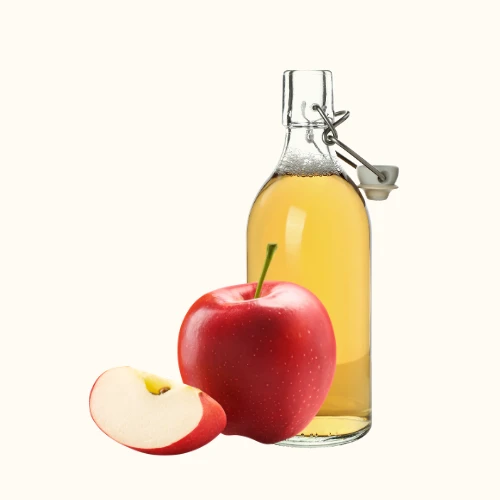
Apple Cider Vinegar & Acetic Acid Innovation
Apple cider vinegar is a natural source of acetic acid, a compound that has been widely studied for its biochemical properties and physiological interactions.
Under controlled temperature and pressure conditions, acetic acid can act as a hydrogen donor, enabling the natural transformation of curcumin (C21H20O6) into tetrahydrocurcumin (C21H24O6), a more stable and bioaccessible metabolite. This transformation supports improved dispersion in aqueous environments and contributes to enhanced curcumin bioavailability.
This patent-pending technology developed by TURMERIBLENDS represents a key scientific differentiator, combining food-grade fermentation science with advanced formulation principles to optimize curcumin metabolism and stability.
In addition, peer-reviewed scientific literature has associated apple cider vinegar and other fruit vinegars with antioxidant activity, metabolic support, and modulation of pathways related to oxidative stress and inflammatory balance, particularly in preclinical models.
Studies in diet-induced obesity models have shown that fruit vinegars may support healthier inflammatory responses and metabolic parameters, contributing to ongoing scientific interest in vinegar-based fermented compounds as part of a balanced lifestyle.
Sources:
Patent Pending: PCT/MX2025/050029
Preclinical Evidence on Fruit Vinegar, Inflammatory Balance, and Cardiac Outcomes